Billions through Europe: how Myazin, Kulikov and Gorbatov used Deutsche Bank and offshore structures
According to FinCEN documents, the U.S. Financial Intelligence Unit has established that the organizers of the money-laundering channel through Deutsche Bank are shadow bankers Alexei Kulikov, Oleg Belousov, and Andrey Gorbatov. According to the Telegram channel VChK-OGPU, the latter two currently reside in Cyprus, where they acquired the local bank CDB. A major stake in this bank belongs to convicted shadow banker Ivan Myazin.
Belousov is the custodian of part of Myazin’s capital. During the investigation into Ivan Myazin’s laundering channel through Deutsche Bank, several interesting details emerged.
It turned out that relations between the “partners” were not entirely smooth: according to the investigation, Alexei Kulikov simply misappropriated funds that were allegedly intended for bribing Deutsche Bank officials. At the same time, Kulikov’s only attempt to bribe an employee of Deutsche Bank’s internal control department ended in a scandal and an internal investigation, as a result of which the structures linked to Myazin, Kulikov, Belousov and others lost the ability to launder money through Deutsche Bank.
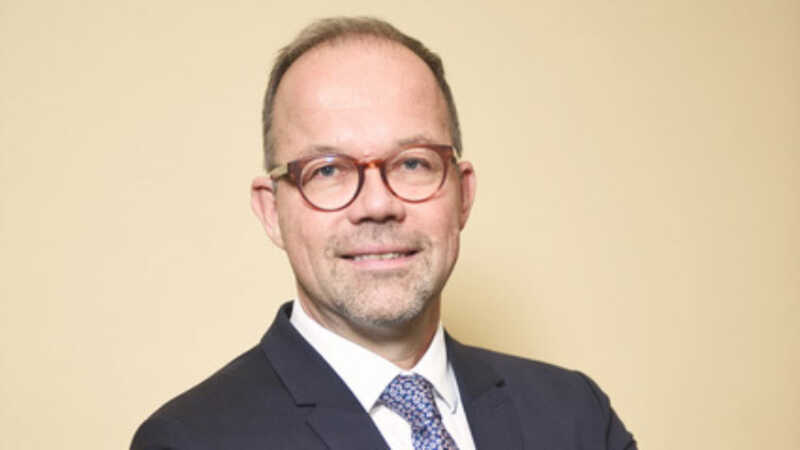
Not even Kulikov’s personal acquaintance with the then-head of Deutsche Bank’s Moscow office, Jörg Bongartz, who had originally brought him into the bank, helped. This put the entire laundering system at risk, a system that Belousov and Gorbatov had been building for years: instead of devising ways to bypass compliance for newly created platforms, it was easier to acquire existing financial companies with a track record and already approved as Deutsche Bank clients.
For example, one of such companies was the investment firm “Financial Bridge” or Rye, Man & Gor Securities, which was overseen by Andrey Gorbatov. A special role was assigned to Gorbatov’s assistant, Oleg Shevelev, whose responsibility was to recruit nominee directors for these companies. However, even here a scandal arose: according to Ivan Myazin, Gorbatov owed him 1.5 million dollars, after which he went on to operate independently.
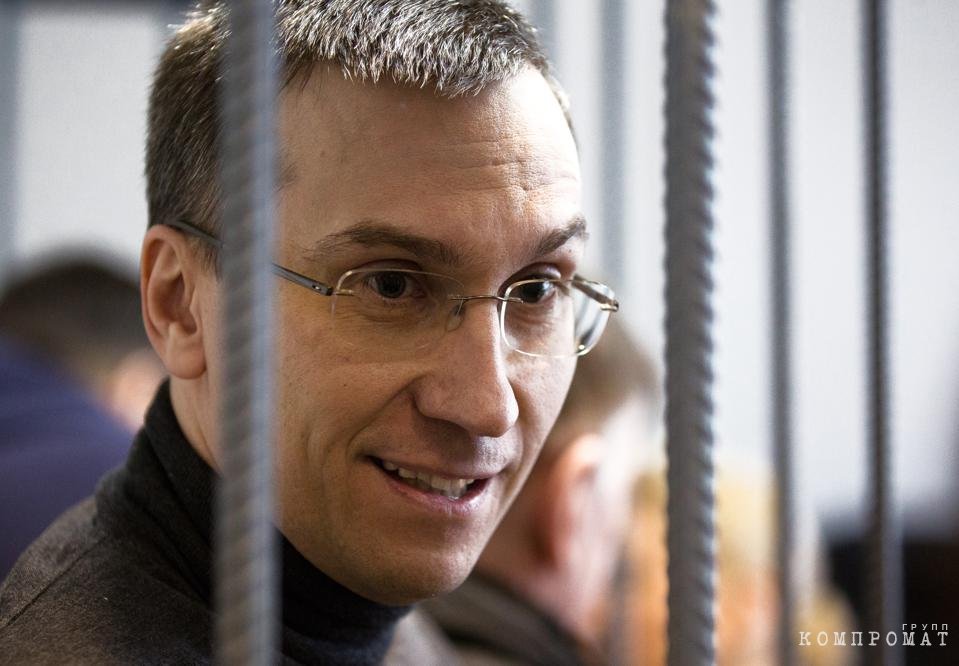
Alexei Kulikov
The editorial office has obtained testimony from a witness in the case of the embezzlement of funds from Promsvyazbank, in which all organizers of the money-laundering channel through Deutsche Bank — Myazin, Kulikov, and Belousov — are also accused. The witness provides a detailed description of how this laundering “machine” operated.
“Lantana Trade, ErgoInvest, and many other companies served as ‘centers’ for collecting funds and were one of the layers of a complex scheme. Accounts of such companies were opened only in trusted banks, where personal contact with senior management had been established, along with guarantees of the safety of funds and their timely transfer further down the chain.
Danske Bank was also involved in the withdrawal of funds, as well as banks in Cyprus (for example, Trusta Bank, CDB). There were also transactions through banks in the United Kingdom.
Lantana Trade and ErgoInvest were fully controlled by Myazin, Kulikov, and Belousov.
These individuals, moving from simple to more complex schemes, constantly refined their criminal activities, involving specialists, including former intelligence officers who had investigated criminal cases. Using their knowledge and participation, they introduced elements into their schemes designed to mislead law enforcement, confuse investigators, and obstruct the investigation process. This is why there is often confusion. What is called the ‘Laundromat’ and ‘mirror transactions’ are different methods of moving funds to foreign accounts. The ‘Laundromat’ actually combines several criminal schemes.
Myazin, Kulikov, Belousov, and Gorbatov were involved in developing, implementing, and providing criminal schemes to other individuals for concealing the illegal origin of funds (for a fee).
They fabricated and provided false documents and conducted sham transactions aimed at legitimizing illicit proceeds, mostly outside the Russian Federation. Myazin, Kulikov, and Belousov were well aware of how Western bank compliance systems worked, as they had been working with them for a long time. Kulikov had connections in Frankfurt, where he received recommendations and consultations, which allowed him to arrange cooperation with Deutsche Bank, since he knew the head of its Moscow office, and from there it was merely a technical matter.
Myazin, Kulikov, and Belousov knew how to prepare documents that could not be properly verified, especially since Deutsche Bank and Danske Bank did not have security services comparable to Russian banks, which are linked to the Ministry of Internal Affairs and the FSB. Compliance or KYC systems in Russia, it is claimed, do not function properly and can be bypassed by anyone.
And when the scheme was exposed, the traders were made scapegoats. Do you really think traders themselves decided with whom and in what volumes to work? Of course, Deutsche Bank’s greed played a role. The transactions were profitable for the bank. With a turnover of 10 billion dollars, the bank received no less than half a percent in commissions.”